
A messy pantry can make even a small kitchen feel cluttered. Bags of flour and boxes can pile up; Best Pantry storage containers help you see what you have.
The good news is you don’t need a huge pantry for Best Pantry storage.
Using Best Pantry storage containers, you can avoid an expensive kitchen makeover and still create a cleaner, more organized space.
The right pantry storage containers can help you group similar foods, make ingredients easier to see, maximize shelf space, and create that neat, organized pantry look you’ve been saving on Pinterest.
In this guide, we’ve rounded up 20 pantry storage container options and styles worth considering, from airtight plastic containers and stackable cereal keepers to glass containers and space-saving designs.
Disclosure: This post may contain affiliate links. If you purchase through our links, we may earn a commission at no additional cost to you.
What to Look for in Pantry Storage Containers
Before buying a complete set, think about what you actually store in your pantry.
1. Airtight lids
If you’re storing flour, sugar, cereal, rice, pasta, or other dry ingredients, a good seal can help keep food fresher and reduce exposure to moisture and air.
2. Clear containers
Clear sides make it much easier to see what you have without opening every container.
3. Stackable shapes
Square and rectangular containers generally make better use of shelf space than containers with lots of curved edges.
4. Different sizes
One size doesn’t work for everything. Smaller containers can be useful for snacks and baking ingredients, while larger containers work well for cereal, flour, rice, and pasta.
5. Easy-to-clean materials
Look for containers that are practical for your household and easy to wash according to the manufacturer’s instructions.
20 Best Pantry Storage Containers & Styles
1. Rubbermaid Brilliance Pantry Storage Containers
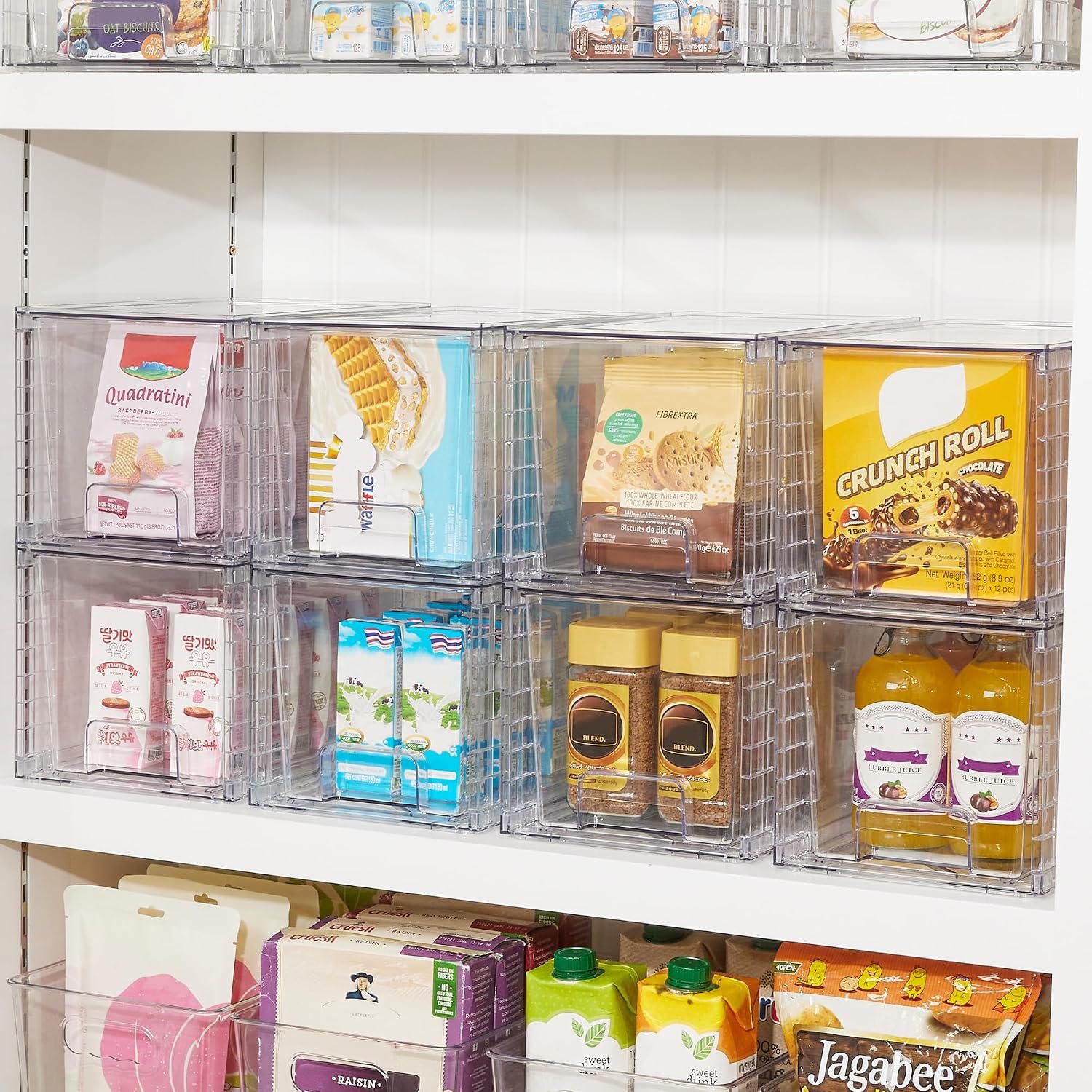
Rubbermaid Brilliance is a popular option for creating a coordinated pantry system. The clear design makes the contents easy to see, while the range of sizes can be useful for organizing different dry goods.
Best for: A polished, coordinated pantry
Great for: Cereal, pasta, flour, sugar and snacks
Why consider it: A well-known pantry-storage system with multiple container sizes.
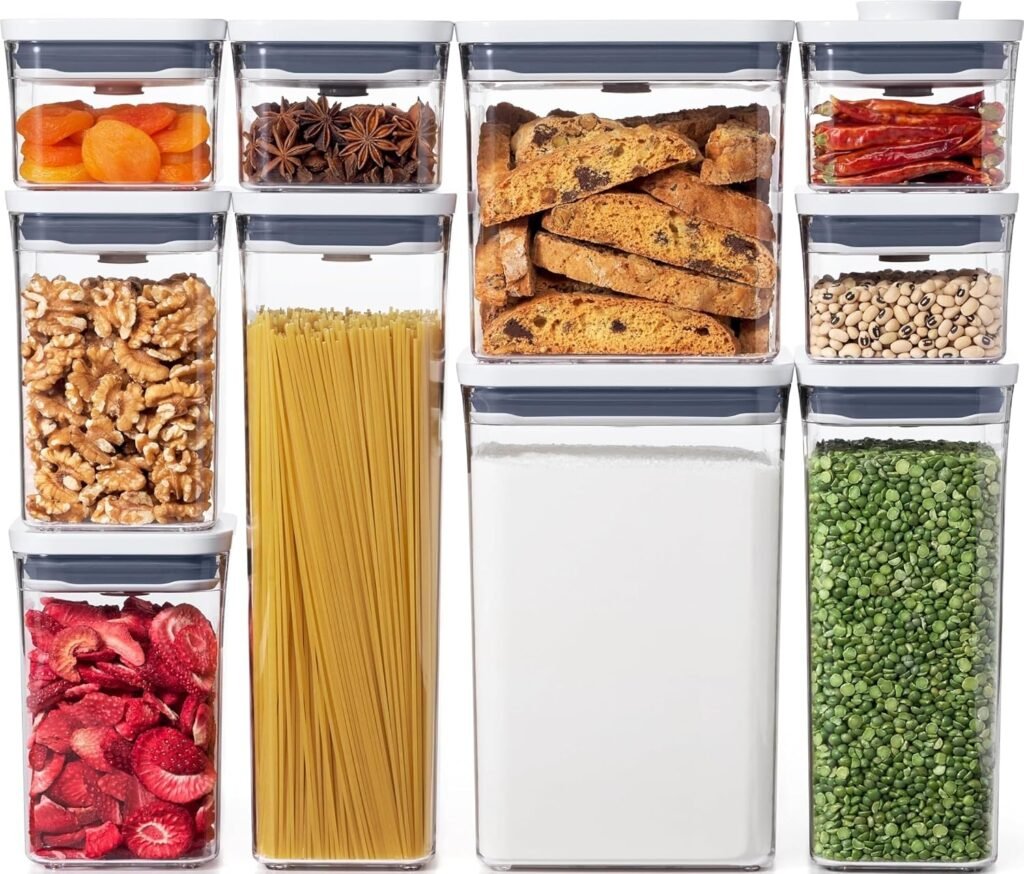
2. OXO POP Storage Containers
OXO POP containers are designed around a simple push-button lid system and come in different shapes and sizes.
They’re particularly useful if you want your pantry containers to have a uniform appearance while still being practical for everyday use.
Best for: Modern, organized pantries
Great for: Cereal, baking ingredients, snacks and dry goods
Why consider it: The stackable shapes and distinctive lids make them easy to organize.
2. OXO POP Storage Containers
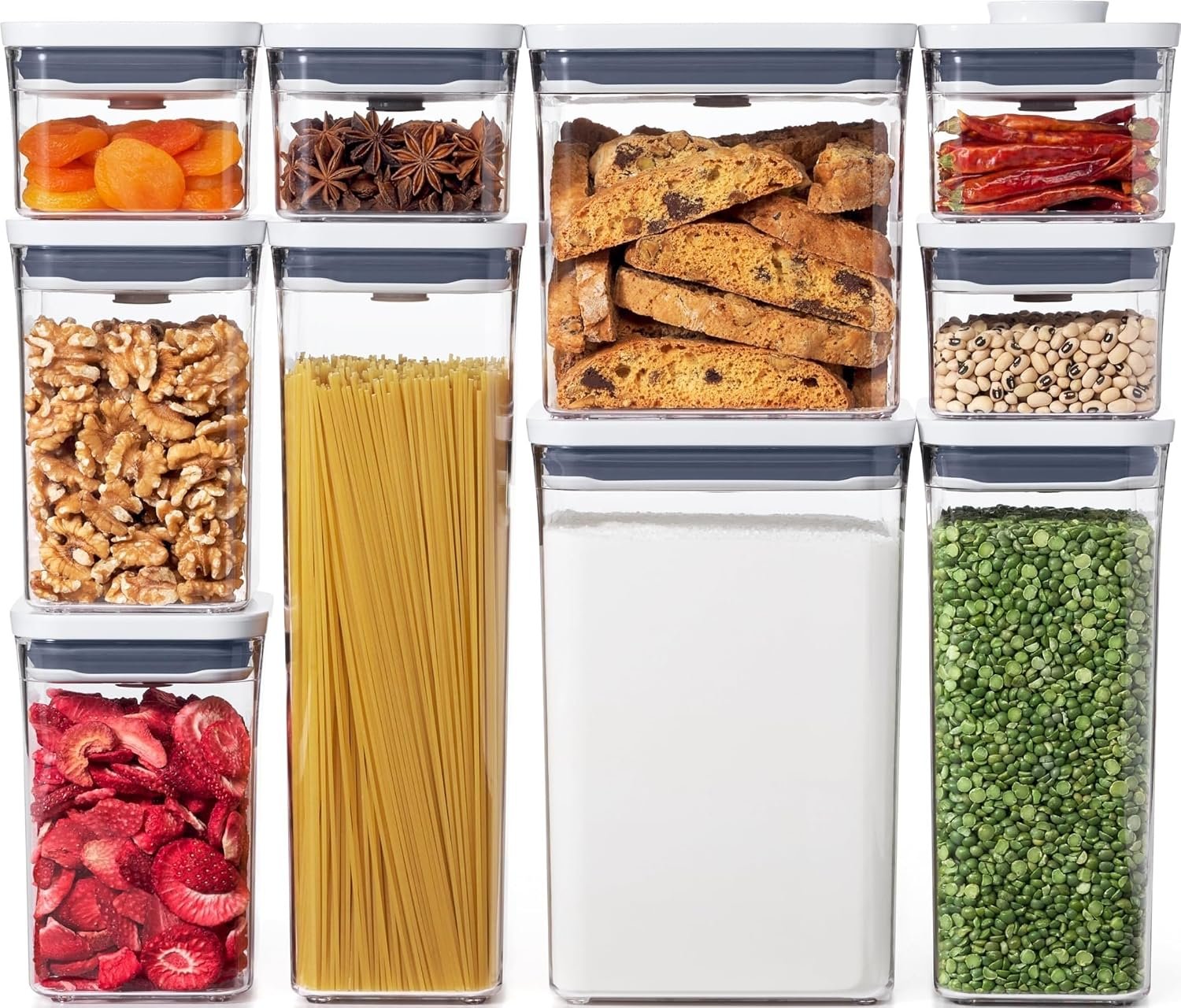
OXO POP containers are designed around a simple push-button lid system and come in different shapes and sizes.
They’re particularly useful if you want your pantry containers to have a uniform appearance while still being practical for everyday use.
Best for: Modern, organized pantries
Great for: Cereal, baking ingredients, snacks and dry goods
Why consider it: The stackable shapes and distinctive lids make them easy to organize.
3. Vtopmart Airtight Food Storage Containers
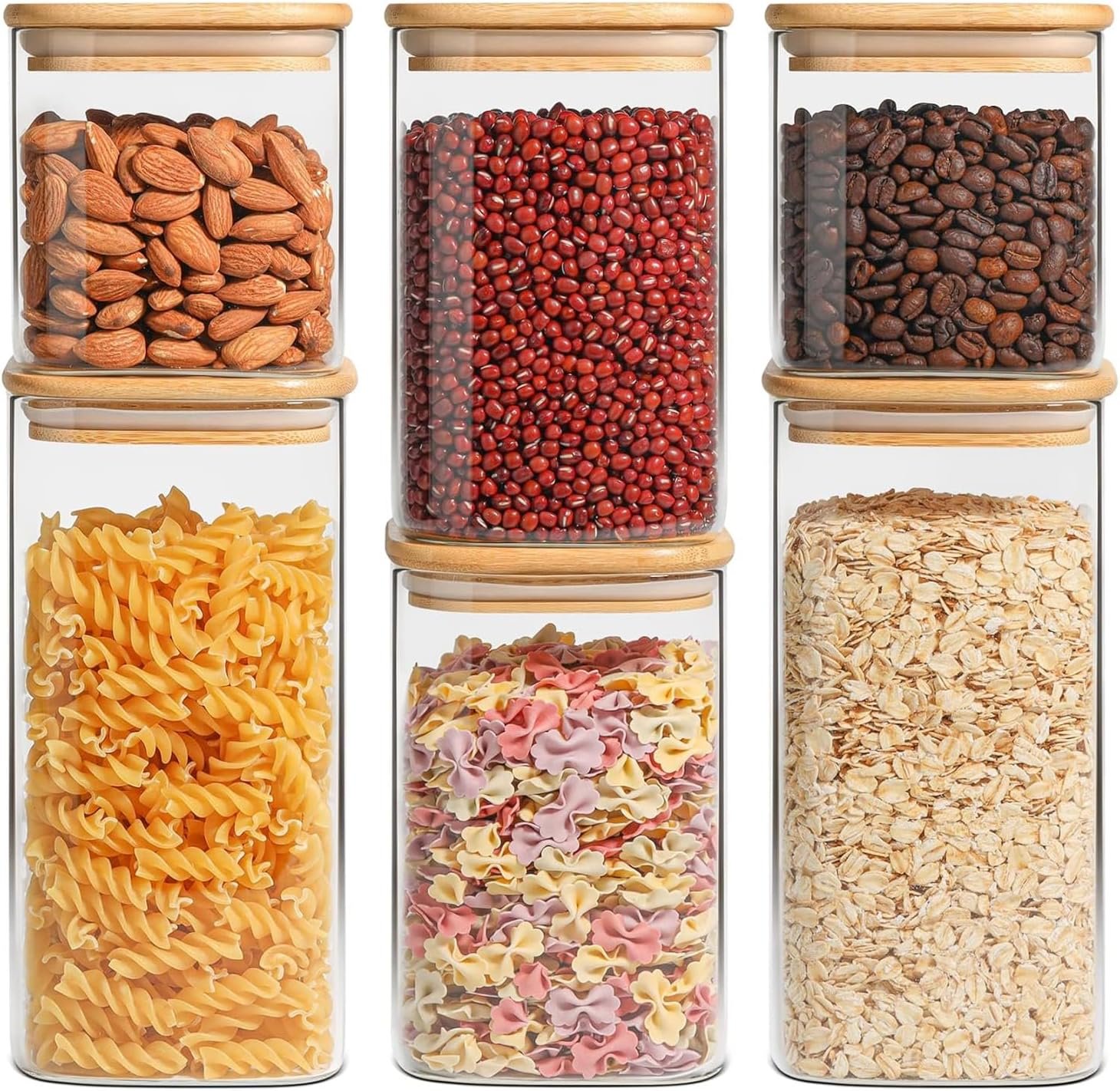
Vtopmart offers pantry container sets in multiple configurations, making them useful if you want to organize several categories of dry ingredients at once.
Best for: Large pantry makeovers
Great for: Flour, sugar, cereal, pasta and baking supplies
Why consider it: Sets can give your pantry a more consistent look without purchasing each container separately.
4. Chef’s Path Airtight Food Storage Containers
Chef’s Path containers are designed for storing dry foods and commonly come in larger sizes suitable for bulk ingredients.
Best for: Bulk pantry ingredients
Great for: Rice, flour, sugar and cereal
Why consider it: Larger capacities can be helpful if you regularly buy pantry staples in bulk.
5. Utopia Kitchen Cereal Storage Containers
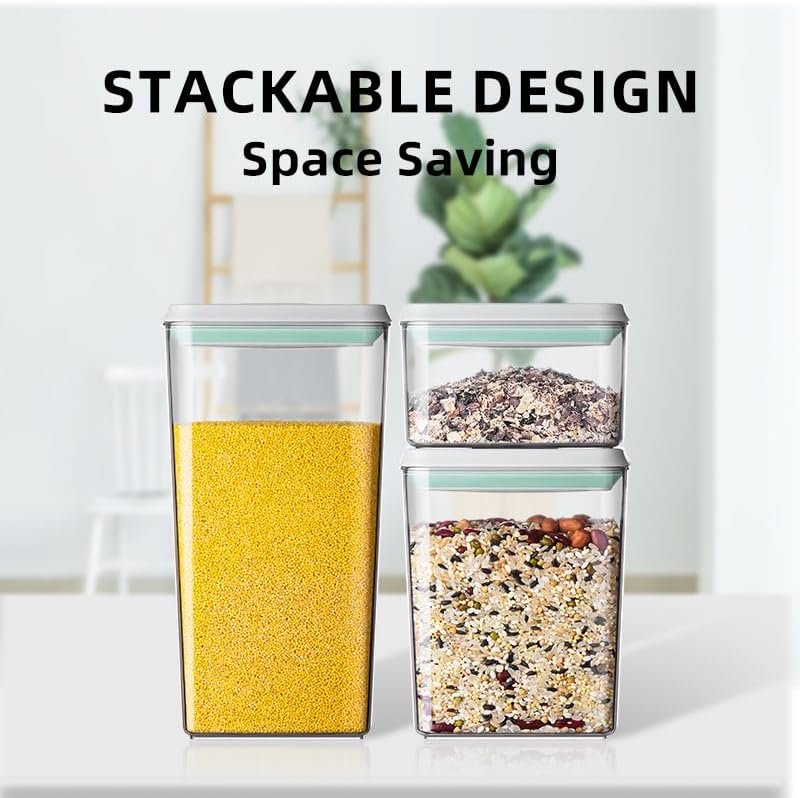
Cereal containers can be particularly useful when open cereal boxes are taking up too much room in your pantry.
A dedicated container keeps cereal contained and makes it easier to see how much is left.
Best for: Cereal storage
Great for: Cereal, granola and other dry breakfast foods
Why consider it: Tall containers can make better use of vertical shelf space.
6. LocknLock Airtight Food Storage Containers
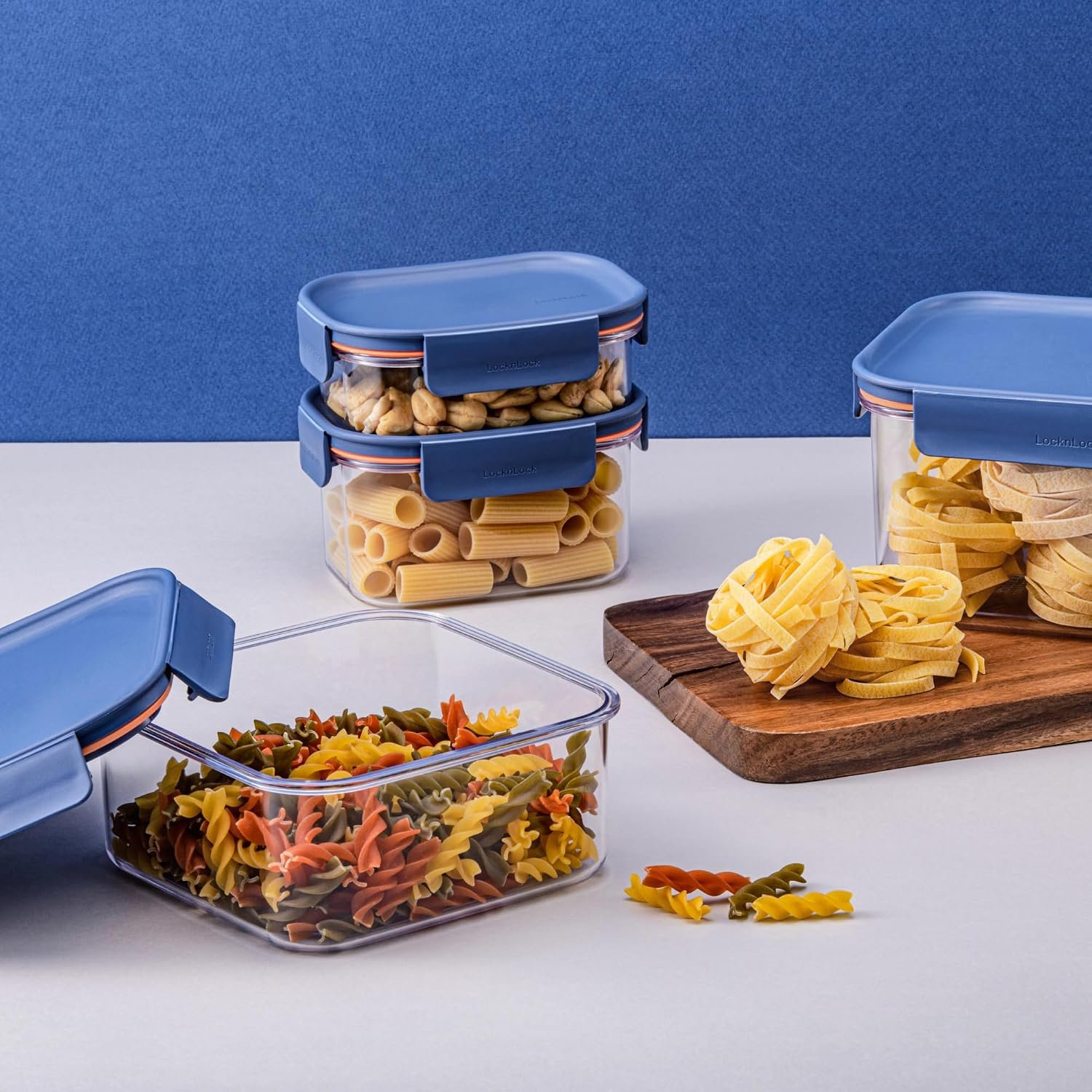
LocknLock is another option to consider if airtight food storage is a priority.
Different shapes and sizes can be mixed to create a flexible pantry organization system.
Best for: Everyday pantry storage
Great for: Rice, pasta, cereal and snacks
Why consider it: The brand is known for its food-storage container range.
7. Square Airtight Pantry Containers
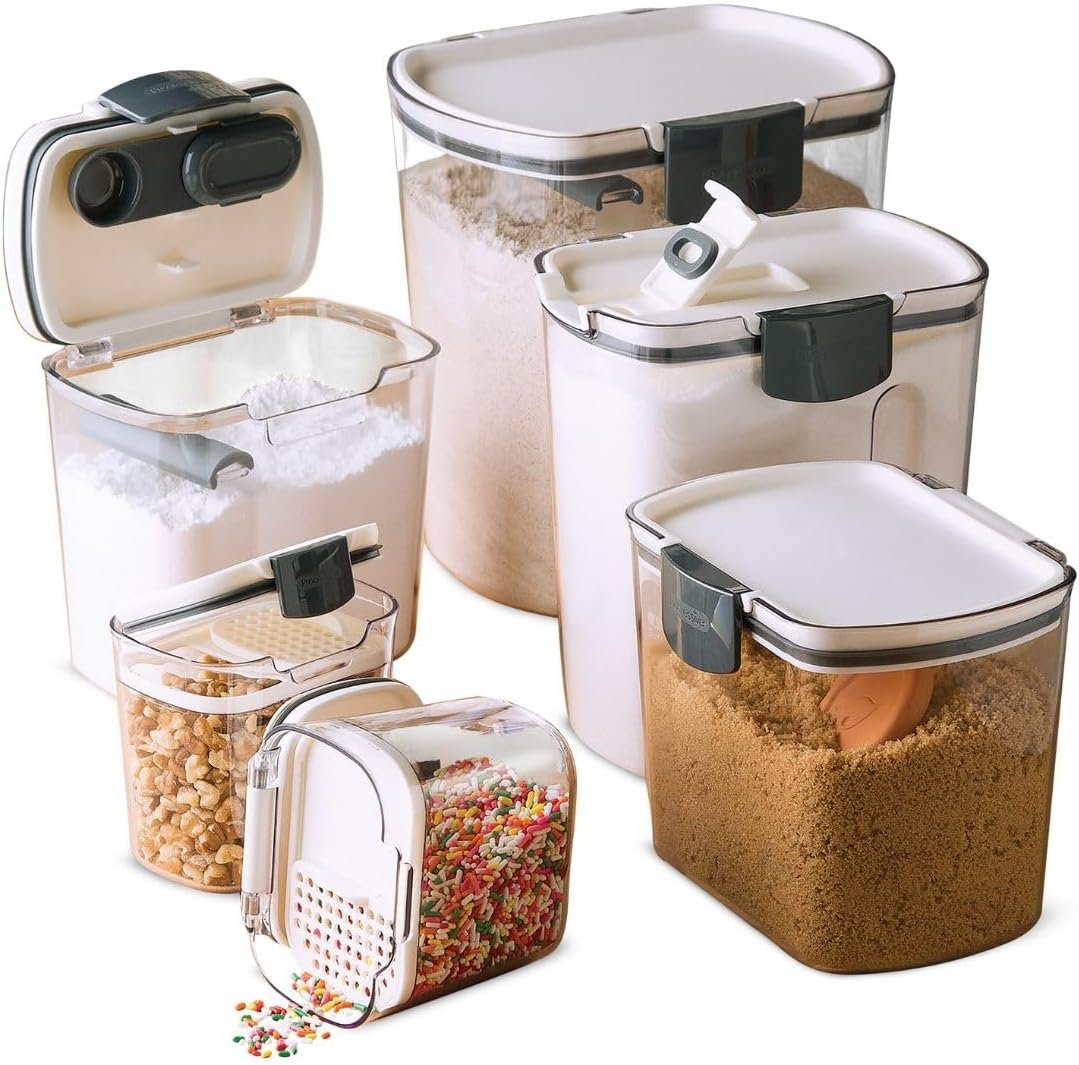
Square containers are excellent for maximizing shelf space because they can usually sit closely together without leaving as much unused space between them.
Best for: Small pantries
Great for: Flour, sugar, grains and snacks
Why consider it: The straight sides make shelves easier to organize.
8. Tall Pantry Containers
Tall containers are especially useful when you have shelves with plenty of vertical clearance.
They’re a practical choice for long pasta, cereal, flour and other ingredients that benefit from taller storage.
Best for: Tall pantry shelves
Great for: Pasta, cereal and larger dry ingredients
Why consider it: They take advantage of vertical storage space.
9. Stackable Pantry Containers
If shelf space is limited, stackable containers can help you use the vertical area more efficiently.
Look for stable, flat tops and sizes that fit together well.
Best for: Small kitchens
Great for: Snacks, grains and baking supplies
Why consider it: Stacking can free up valuable shelf space.
10. Glass Pantry Storage Containers
If you prefer glass over plastic, glass food-storage containers are another option.
They can give a pantry a clean, premium appearance and are particularly attractive for open shelving.
Best for: Aesthetic pantry organization
Great for: Grains, baking ingredients and dry foods
Why consider it: Glass has a timeless appearance and doesn’t absorb odors as some materials can.
11. Small Airtight Containers
Not everything in your pantry needs a large container.
Small containers can be extremely useful for items such as seeds, nuts, chocolate chips, sprinkles, small snacks and baking ingredients.
Best for: Small ingredients
Great for: Baking supplies and snacks
Why consider it: Small containers prevent tiny packages from getting lost in a deep pantry.
12. Large Pantry Containers
Large containers make sense for ingredients your household uses frequently or buys in larger quantities.
Think rice, flour, sugar, oats and cereal.
Best for: Bulk storage
Great for: Large quantities of dry ingredients
Why consider it: Larger capacity means fewer partially opened bags around your pantry.
[Check the latest Amazon price →]
13. Narrow Pantry Containers
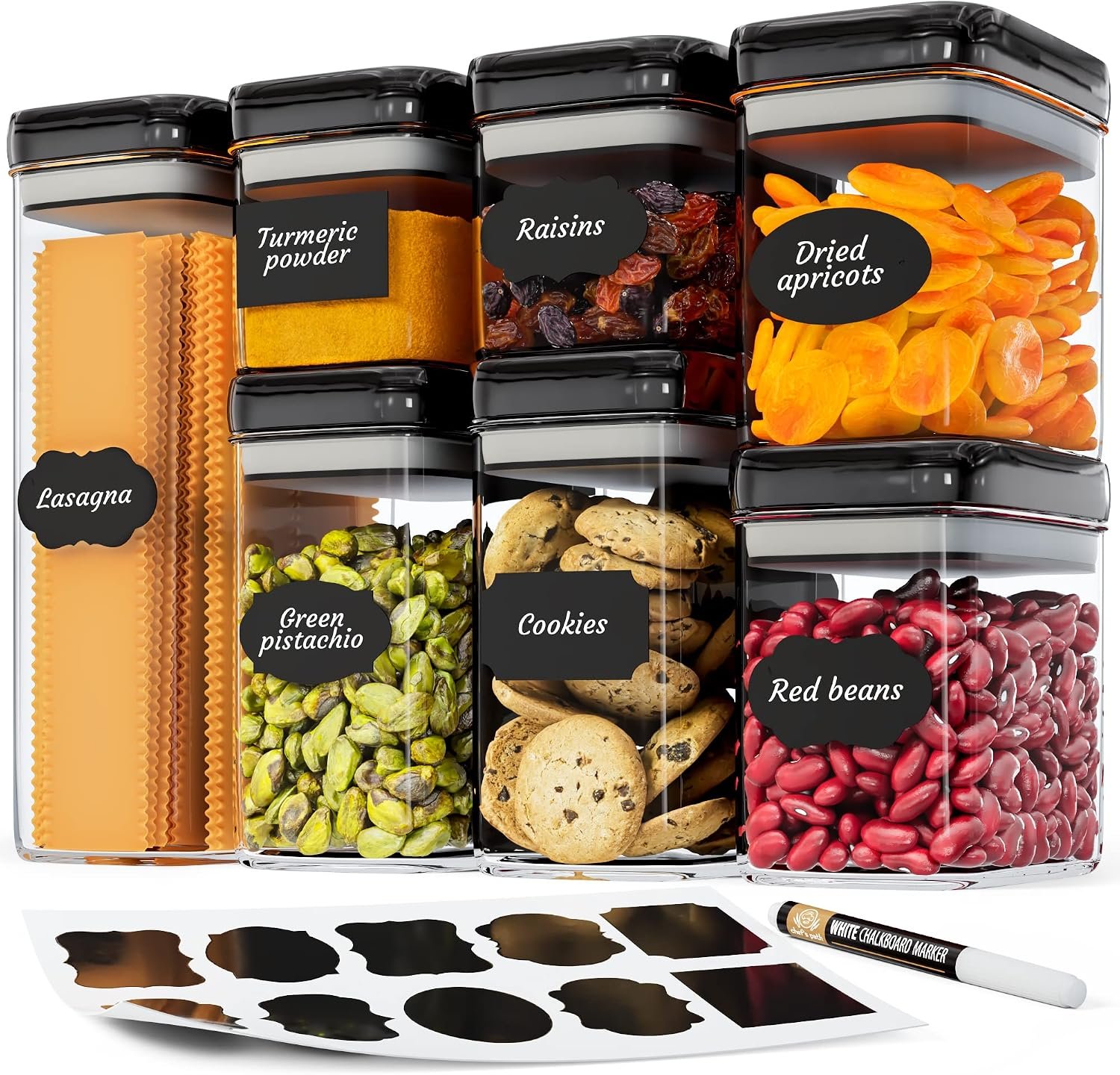
Have a narrow shelf or awkward gap?
Slim containers can turn otherwise wasted space into useful storage.
Best for: Narrow shelves
Great for: Pasta, snacks and smaller packages
Why consider it: They’re useful for making the most of difficult pantry spaces.
14. Pourable Cereal Containers
Pourable containers are convenient when you want to make breakfast quick and easy.
Instead of opening a cereal box and using a separate bowl, you can simply pour the desired amount.
Best for: Busy households
Great for: Cereal and granola
Why consider it: Convenient dispensing can make everyday use easier.
15. Pantry Containers With Measuring Features
Some food-storage systems include measurement markings or accessories that make it easier to portion ingredients.
These can be particularly useful for people who bake or cook frequently.
Best for: Bakers and home cooks
Great for: Flour, sugar and other measured ingredients
Why consider it: Measurement markings can make cooking and baking more convenient
16. BPA-Free Plastic Pantry Containers
For households that prefer lightweight containers, BPA-free plastic options can be practical.
They’re generally easier to handle than glass, especially when storing larger quantities.
Best for: Everyday family kitchens
Great for: Cereal, pasta, rice and snacks
Why consider it: Lightweight storage is convenient for frequent use.
17. Pantry Containers With Labels
Labels can take pantry organization to the next level.
Once everything has its own designated container and label, it’s much easier to maintain the system.
Best for: Aesthetic and organized pantries
Great for: Families and busy kitchens
Why consider it: Labels make it easier to identify ingredients quickly.
18. Modular Pantry Container Sets
Modular sets are designed so that multiple container sizes work together as a system.
This can be useful if you’re starting a pantry makeover from scratch.
Best for: Complete pantry transformations
Great for: Multiple types of dry food
Why consider it: Coordinated sizes can make your shelves look more uniform.
19. Budget-Friendly Pantry Container Sets
You don’t have to spend a fortune to organize your pantry.
A basic airtight container set can give you many of the practical benefits of a premium system at a lower cost.
Best for: Budget pantry makeovers
Great for: First-time organizers
Why consider it: Buying a set can be more economical than purchasing individual containers.
20. Premium Pantry Storage Systems
If you’re creating a highly organized, aesthetic pantry and don’t mind spending more, a premium coordinated storage system may be worth considering.
These systems can combine matching containers, labels and accessories to create a consistent look.
Best for: Aesthetic pantry makeovers
Great for: Home organization enthusiasts
Why consider it: A coordinated system can create a clean, high-end appearance.
Which Pantry Containers Are Best for You?
There isn’t one perfect container for every pantry.
Best for an aesthetic pantry
Look for clear, matching containers with uniform shapes and attractive labels.
Best for small kitchens
Choose stackable and square containers that maximize shelf space.
Best for bulk ingredients
Go for larger airtight containers with enough capacity for the quantities you regularly purchase.
Best for cereal
Tall cereal keepers can make use of vertical space and keep open boxes off your shelves.
Best for baking ingredients
Use a combination of medium and large airtight containers so flour, sugar, oats and other ingredients are easy to access.
Best budget option
A multi-piece pantry container set can be a practical starting point when you’re organizing several shelves at once.
How to Organize Your Pantry With Storage Containers
Buying containers is only half the job. Here’s a simple system that can make your pantry much easier to maintain.
Step 1: Empty the pantry
Take everything out and group similar foods together.
Step 2: Check expiration dates
Discard expired or questionable food according to safe food-disposal practices.
Step 3: Measure your shelves
Before buying containers, measure the width, depth and height of your pantry shelves.
This step is easy to skip—and can save you from buying containers that don’t fit.
Step 4: Choose container sizes
Match container sizes to the foods you actually store.
Don’t buy a huge container just because it looks good if you rarely store that ingredient.
Step 5: Transfer dry foods
Move suitable dry ingredients into your chosen containers.
Always follow the container manufacturer’s instructions regarding the foods it is suitable for.
Step 6: Add labels
Labels make it easier for everyone in the household to put things back where they belong.
Step 7: Create zones
For example:
Zone 1: Breakfast
Zone 2: Baking
Zone 3: Pasta & grains
Zone 4: Snacks
Zone 5: Cooking essentials
Step 8: Leave some breathing room
Don’t fill every shelf to the point where nothing can be easily removed.
A pantry that’s beautiful but difficult to use won’t stay organized for long.
Pantry Organization Tips That Make a Big Difference
Use the same container style
A coordinated collection instantly makes a pantry look more organized.
Don’t decant everything
Some foods are perfectly fine staying in their original packaging. Focus your containers on foods where they actually improve storage and visibility.
Use labels
Even clear containers can become confusing when several ingredients look similar.
Keep frequently used items at eye level
Store everyday foods where they’re easiest to reach.
Use baskets for irregular packages
Not every food needs an airtight container. Baskets can be useful for packets and oddly shaped items.
Frequently Asked Questions
Are airtight containers good for pantry storage?
They can be useful for many dry foods because they help limit exposure to air and moisture. Always choose containers appropriate for the specific food and follow the manufacturer’s instructions.
Are glass or plastic containers better?
It depends on your priorities. Glass can provide a premium look and is heavier, while plastic is generally lighter and easier to handle. Consider your household, pantry layout and cleaning preferences.
Do pantry containers save space?
They can. Containers with stackable, straight-sided designs may use shelf space more efficiently than a mixture of partially opened bags and boxes.
Should I buy all 20 containers?
No. You don’t need 20 different types.
Start by identifying what you actually store and choose containers based on your pantry dimensions, food quantities and daily habits.
What size containers should I buy?
Use smaller containers for snacks and small ingredients, medium containers for pasta and baking supplies, and larger containers for foods such as flour, rice, oats and cereal.
Final Thoughts
A well-organized pantry doesn’t have to mean buying dozens of expensive containers.
The best system is one that fits your space, your food habits and your budget.
If you’re starting from scratch, begin with the foods that create the most clutter—cereal, flour, sugar, pasta, rice and snacks—and gradually build your storage system from there.